


Rooted in the Earth: Grounding Practices for Emotional Stability
By Nishita Shah
Grounding practices are ancient, intuitive tools that help return your awareness to the present moment. In this article, you will discover how Ayurvedic wisdom and simple daily techniques can support a calmer, more connected way of living.
- Ayurveda views emotional steadiness as connected to the earth element and offers time-honored practices to help maintain inner balance.
- Grounding works by redirecting attention from mental loops back into the body and senses. This may support emotional regulation and a greater sense of calm.
- Simple practices like walking barefoot, deep breathing, and mindful movement are accessible and effective grounding techniques.
- The 5-4-3-2-1 and 3-3-3 sensory awareness methods are easy tools for returning to the present moment.
- For those seeking a deeper reset, panchakarma offers a seven-day all-inclusive immersive experience where grounding is built into every aspect.
There are moments when life moves faster than we can follow.
The mind races. The body feels distant. Emotions rise and fall like weather patterns with no clear sky in sight.
In these moments, what we need most is not more doing. We need to come home to ourselves.
Grounding practices are ancient, intuitive, and profoundly simple. They are the art of returning: Returning to the body, to the breath, to the present moment, and to the quiet intelligence that lives beneath the noise.
At SoHum Mountain Healing Resort, grounding is not a technique we teach. It is a way of being that we help you remember.
What Does It Mean to Be Grounded?
To be grounded is to feel present, stable, and connected. It means your awareness is here, in your body, in this moment, rather than scattered across worries about tomorrow or regrets about yesterday.
In Ayurveda, groundedness is closely linked to the earth element. When we feel anxious, unsteady, or emotionally scattered, Ayurvedic wisdom suggests there may be an imbalance in vata, the energy of movement and air. Physical grounding techniques and mindfulness grounding techniques are among the most natural and time-honored ways to return to balance.
This is not medical advice. It is an invitation to explore what your body already knows.
Why Grounding Exercises Work
Grounding techniques work by redirecting attention away from mental loops and back into sensory, physical experience. When the nervous system is overwhelmed, the mind often disconnects from the body as a form of protection. Grounding exercises gently reverse that process.
This is especially meaningful for those exploring grounding techniques. Sensory awareness becomes a thread back to presence. The body becomes a sanctuary rather than something to escape.
Reconnecting with your physical body and the natural world can support emotional regulation, stress reduction, and general wellbeing.
Grounding Practices to Explore
Walking Barefoot on the Earth
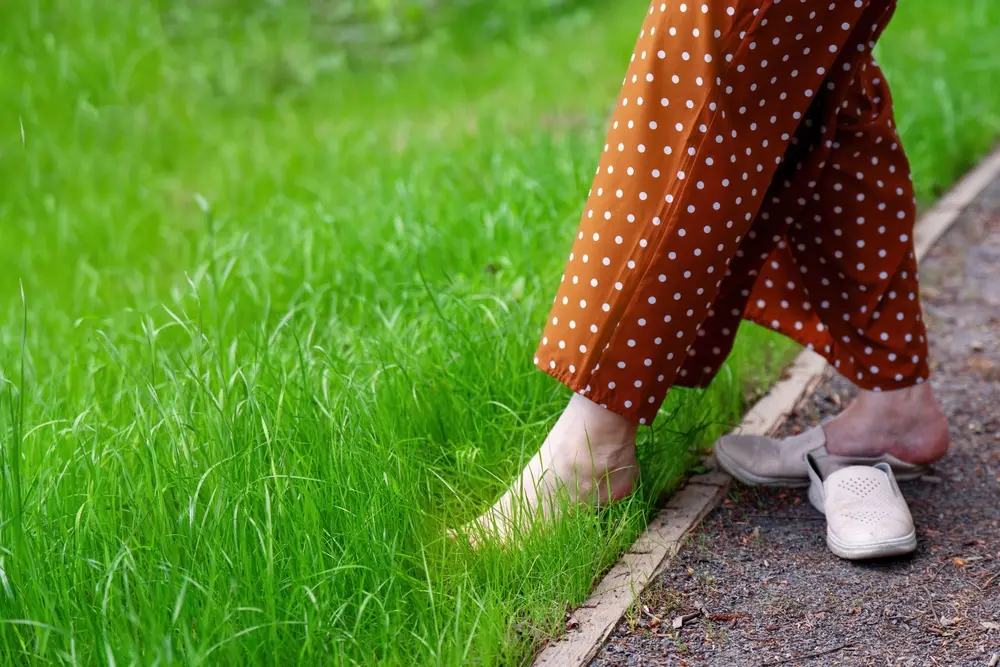
One of the oldest and most accessible grounding and earthing techniques is also one of the most beautiful. Walking barefoot on grass, soil, sand, or stone connects the soles of your feet to the electrical field of the earth. This practice, sometimes called earthing, may support a sense of calm and physical ease.
At SoHum Mountain Healing Resort, nestled in the mountains, the land itself becomes part of the healing. Guests are encouraged to step outside, feel the ground beneath them, and simply breathe. This is how to practice grounding in its most elemental form.
Deep Breathing as an Anchor
Deep breathing is one of the most effective mental grounding techniques available to us at any moment. The breath is always here. It is the one thing the body does that bridges the conscious and the unconscious, the voluntary and the involuntary.
A simple practice: inhale slowly for four counts, hold gently for four counts, exhale for six counts. Repeat this several times. Notice how the body begins to soften. Notice how the mind follows.
In Ayurveda, breathwork, or pranayama, is considered a foundational practice for supporting the nervous system and cultivating inner stillness. It is one of several traditional physical grounding techniques you can carry with you anywhere, alongside practices like mantra and gentle meditation, to help you feel rooted in the present moment.
Curious if this retreat is right for you?
Mindful Movement
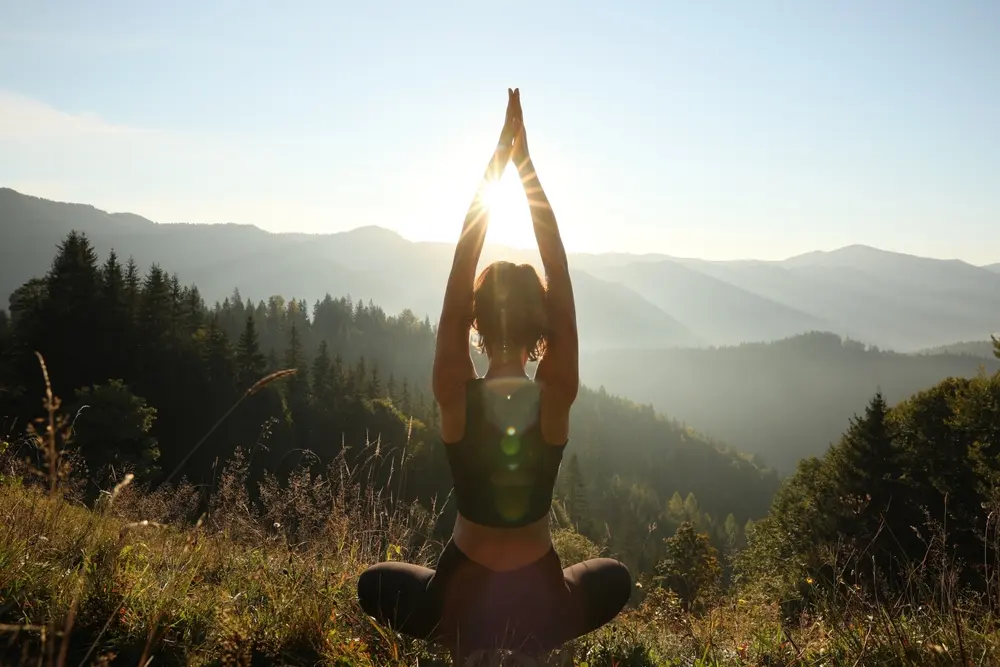
Mindfulness grounding techniques do not always require stillness. Sometimes, the body needs to move in order to arrive. Slow, conscious movement, whether through yoga, a gentle walk, or simply stretching with awareness, can draw the mind out of abstraction and back into the living, breathing body.
At SoHum Mountain Healing Resort, movement practices are woven into daily rhythms. The goal is not performance. It is presence. When we move with intention, the body becomes a moving meditation.
Sensory Awareness: The 5-4-3-2-1 Practice
One of the most well-known mindfulness grounding techniques, the 5-4-3-2-1 method, works by systematically engaging each of the five senses to anchor awareness in the present moment.
What exactly is the 5-4-3-2-1 grounding technique? It’s simple: Notice five things around you. Touch four surfaces. Hear three sounds. Smell two scents. Taste one thing.
This practice asks the mind to engage the world as it actually is, not as it fears it might be.
Time in Nature
Nature is one of the most profound grounding exercises available to us. Trees, water, wind, and open sky carry a kind of stillness that invites the human nervous system to exhale. Time spent outdoors, even quietly sitting, can shift the internal landscape in ways that are difficult to explain and easy to feel.
The mountain setting of SoHum Mountain Healing Resort is not incidental. It is elemental. Healing happens in relationship with the natural world.
Grounding and the Panchakarma Experience
For those seeking a deeper return to balance, our Panchakarma Retreat offers a profoundly restorative experience rooted in classical Ayurvedic tradition. Panchakarma is an all-inclusive seven-day cleansing and rejuvenation process that works on the physical, mental, and energetic levels.
Grounding is woven into every aspect of the Panchakarma Retreat, from warm oil treatments that may support the nervous system to daily routines that reconnect guests with natural rhythms to Ayurvedic education that helps each person understand their own constitution and needs.
FAQ: Your Grounding Questions Answered
How to be emotionally grounded?
Emotional groundedness generally develops through consistent, gentle practices that reconnect you with your body and the present moment. Deep breathing, time in nature, mindful movement, and regular self-care routines are among the most supported approaches. Working with a practitioner, whether in Ayurveda or another wellness tradition, may also offer valuable education and support.
What are the 5 things for grounding?
The “five things” most commonly referenced in grounding exercises are the five senses: sight, touch, hearing, smell, and taste. By deliberately engaging each sense, you redirect the nervous system from a state of reactivity toward presence and calm. This is the foundation of the 5-4-3-2-1 technique and many other physical grounding techniques.
What is the 3-3-3 rule for grounding?
Not unlike the 5-4-3-2-1 rule, the 3-3-3 rule is a simple mindfulness grounding technique. It asks you to name three things you can see, identify three sounds you can hear, and move three parts of your body. It is another quick and effective way to interrupt anxious thought patterns and return attention to the present moment.
Final Thoughts
Grounding is not a destination. It is a practice, a daily choice to return to yourself with kindness and curiosity. Whether through walking barefoot, breathing with intention, or immersing yourself in a panchakarma experience, every moment is a step toward the life you are already meant to be living.
The earth is always beneath you. The breath is always with you. You are never as far from yourself as you fear.
We invite you to explore what grounding can feel like when it is supported by ancient wisdom, mountain air, and a community devoted to wholeness. Come home to yourself at SoHum Mountain Healing Resort.
Learn more about our experiences.
We always recommend working with a qualified healthcare provider before making changes to your health routine. The information shared here is educational in nature and is not intended to diagnose, treat, cure, mitigate, or prevent any disease or health condition.
SHARE

Nishita Shah
CAP, C-IAYT, E-RYT500
Nishita is passionate about sharing the sciences of Ayurveda and Yoga. She is a program instructor at SoHum and also supports clients with their Panchakarma.
